Last updated: November 2026
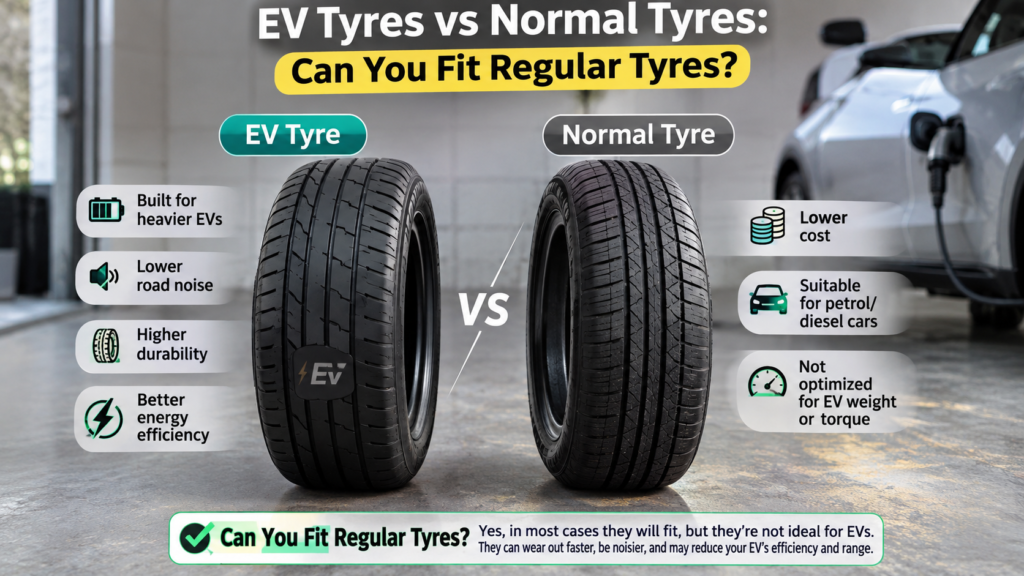
Quick answer: EV tyres vs normal tyres comes down to load, grip, efficiency and noise. EV tyres are built to carry a heavier car, handle instant torque, roll with lower resistance and run quieter. You can legally fit a normal tyre of the right size and load rating on an EV, but you may lose range and comfort, and it can wear faster.
If you drive a Tesla, BYD, MG or Mercedes EQ in Singapore, you will eventually ask at replacement time: do I really need EV tyres, or will normal tyres do? This guide from Motion EV Tyre by Motoserv explains the real differences between EV tyres and normal tyres, when a regular tyre is acceptable, and when it is a false economy.
What is the difference between EV tyres and normal tyres?
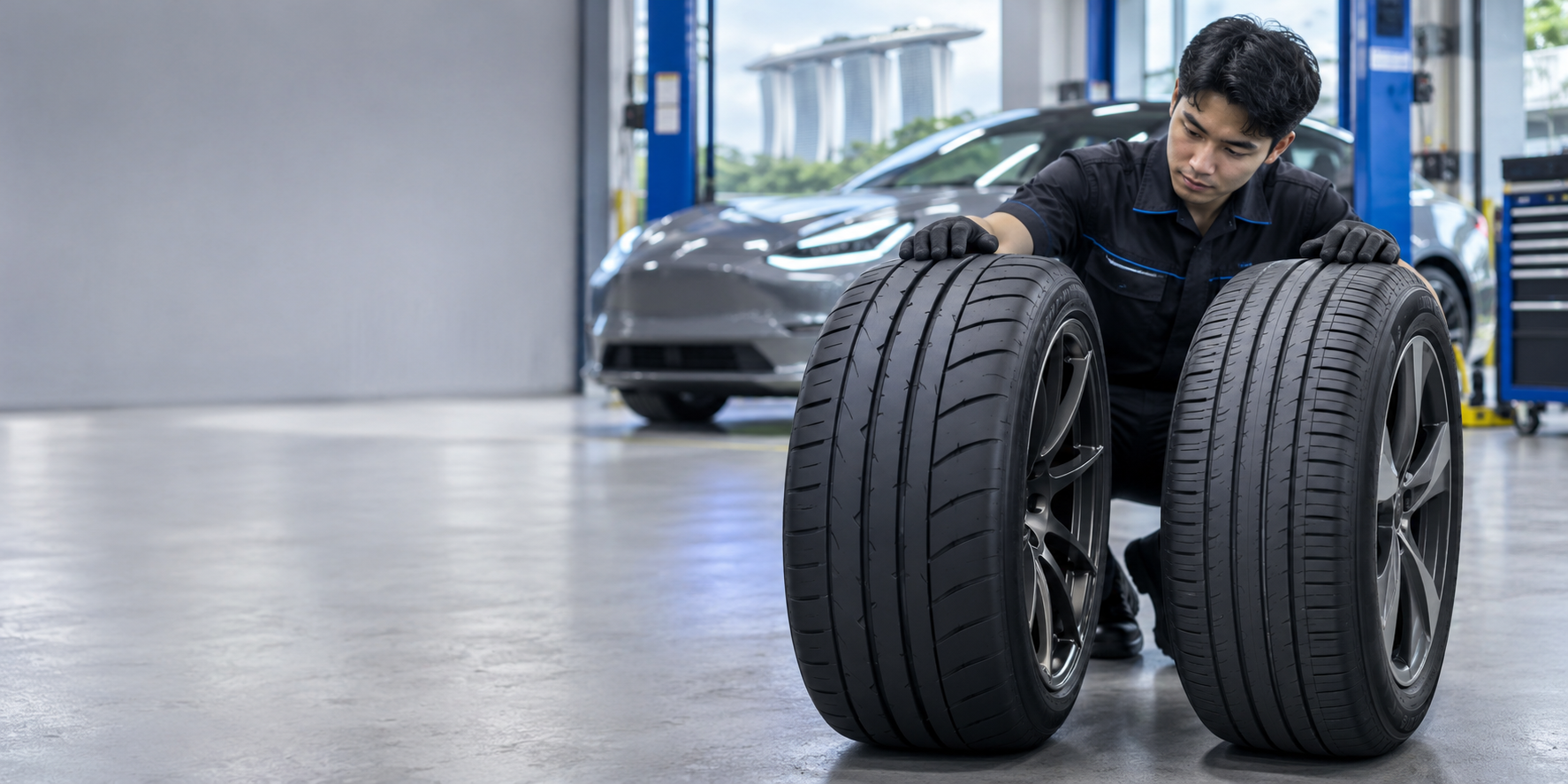
The main difference is that EV tyres are engineered for a heavier, torquier and quieter car, with construction, compound and tread adjusted for an electric drivetrain.
| Feature | EV tyres | Normal tyres |
|---|---|---|
| Load capacity | Reinforced; often XL or HL (High Load) rated for heavy battery packs | Standard or XL load ratings |
| Torque handling | Compound and tread blocks built for instant torque from 0 rpm | Built for gradual torque from an engine |
| Rolling resistance | Low-rolling-resistance compounds to protect range | Varies; not always optimised for efficiency |
| Noise | Often fitted with acoustic foam to cut cabin road noise | No foam in most cases; engine noise masks road roar |
| Wear | Harder-wearing compounds to offset extra weight and torque | Can wear faster when fitted to a heavy EV |
| OE markings | Carmaker-specific codes such as Tesla “T0″/”T1”, Mercedes “MO-S”, Audi “AO”, Porsche “Elect” | Generic or petrol-car OE markings |
Tyre makers such as Hankook describe the same core differences: EV tyres prioritise load capacity, low rolling resistance and reduced noise.
Can you put normal tyres on an electric car?
Yes, you can fit normal tyres on an EV, provided they match the correct size, load index and speed rating on your car’s placard. There is no rule that an EV must run tyres labelled “EV”. What matters most is that the load index is high enough for your car’s weight.
The trade-offs owners notice:
- Range drops. Higher rolling resistance means fewer kilometres per charge.
- The cabin gets louder. With no engine noise to mask it, tyre roar is more noticeable.
- Faster wear. Weight and instant torque scrub a standard compound more quickly.
- Handling feel changes. Non-reinforced sidewalls can feel softer in corners and braking.
So fitting normal tyres is legal but often a poor long-term trade, especially for high-mileage Grab and PHV drivers.
Why do EVs need tyres with a higher load rating?
EVs are heavier than similar petrol cars because of their battery packs, so their tyres must carry more weight. That is shown by the load index (the number before the speed letter, e.g. “98W”) and markings like XL (Extra Load) and HL (High Load).
HL is a newer marking for tyres that carry more load than an XL tyre of the same size. Never fit a tyre with a lower load index than your placard specifies, EV-labelled or not.
Do EV tyres really improve range?
EV tyres can help preserve range because they use low-rolling-resistance compounds and tread designs. Rolling resistance is the energy lost as a tyre flexes while it rolls; the lower it is, the less battery the car uses to cover the same distance.
The exact effect varies by tyre, pressure and driving, so we do not quote a fixed figure. Keeping tyres at the placard pressure and choosing an efficiency-focused EV tyre such as the Michelin e.Primacy or Hankook iON gives you the best chance of keeping your rated range.
Are EV tyres quieter than normal tyres?
Many EV tyres are quieter because they include a layer of polyurethane acoustic foam bonded inside the tyre. The foam absorbs cavity resonance, the hollow “drumming” sound you hear on coarse road surfaces.
In a petrol car, engine sound drowns this out; in a Tesla Model 3 or BYD Seal on the PIE, you hear it clearly. Foam-lined tyres also need correct handling during fitting and puncture repair, one reason to use an EV-specialised workshop.
What do EV tyre markings mean?
OE markings such as Tesla “T0”, Mercedes “MO-S” (with foam), Audi “AO”, Porsche “Elect” and the BMW star show a tyre was developed with that carmaker. They are not compulsory, but they are the closest match to your car’s factory tuning.
During the northeast monsoon (November to March), wet grip and tread depth matter even more. LTA requires at least 1.6mm of tread; see OneMotoring for vehicle requirements.
Signs you need a tyre specialist
Book an EV tyre check if you notice any of these:
- Range has dropped without a change in your driving
- More road noise than when the car was new
- Uneven wear on the inner or outer edges of the tyres
- Vibration at expressway speeds
- A TPMS warning light that keeps coming back
- Tread close to the 1.6mm wear indicators, or sidewall cuts and bulges
How Motion EV Tyre helps
Motion EV Tyre by Motoserv is Singapore’s EV and hybrid tyre specialist, part of MK Group. Our IMI-certified technicians work only with 100% genuine tyres and EV-capable equipment. We help you choose between EV tyres and normal tyres based on your car’s load rating, OE marking and how you drive.
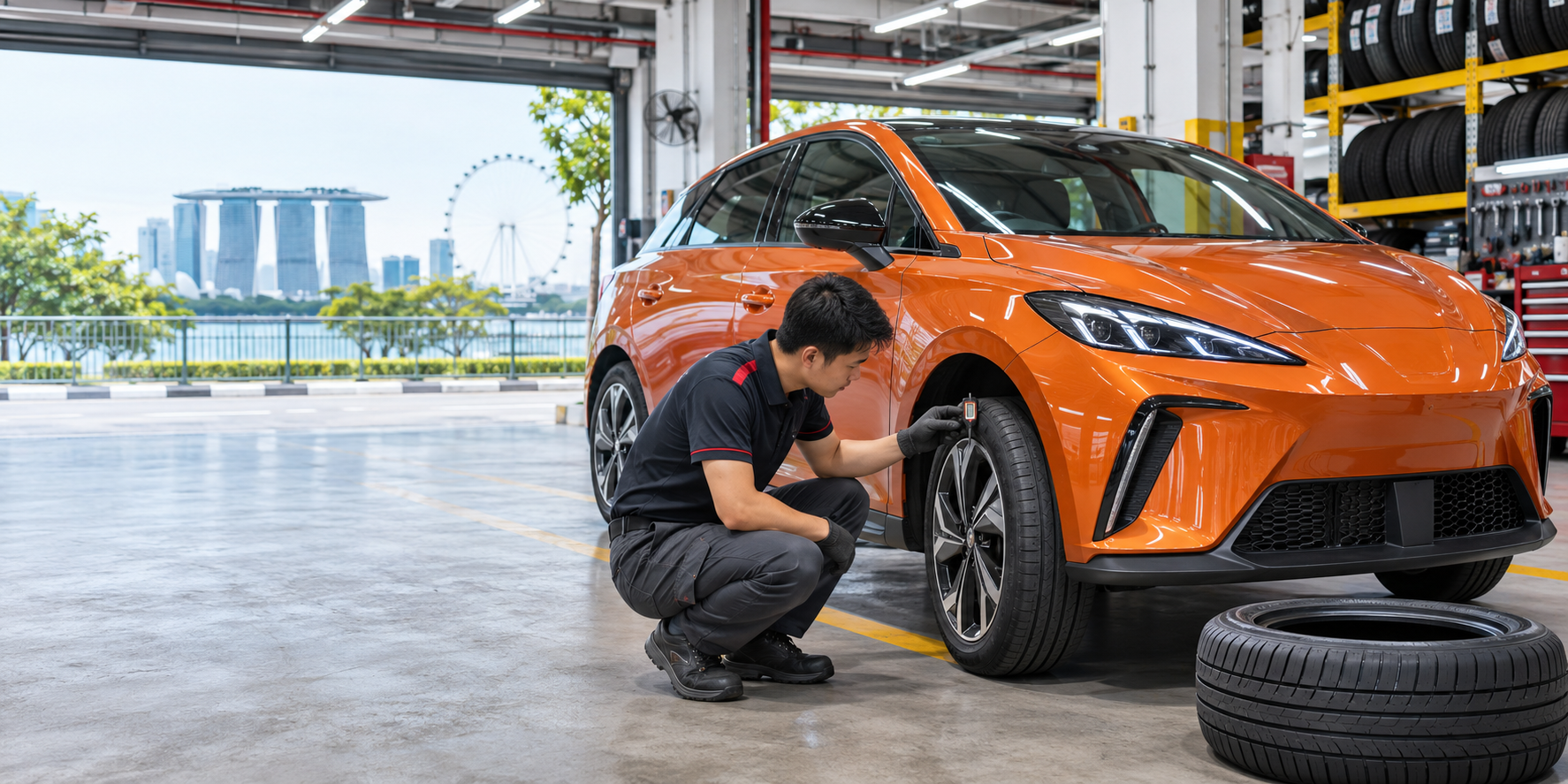
- EV tyre inspection with diagnostic tools
- Tyre supply and installation for Tesla, BYD, MG4, BMW and Mercedes EQ
- Wheel balancing and tyre rotation
- TPMS sensor service and programming
- Brands we fit: Michelin (e.Primacy, Pilot Sport EV), Continental EV tyres, Hankook iON, Giti EV series and Toyo Proxes EV
For more background, read our complete guide to electric vehicle tyres in Singapore and how long EV tyres last. Prices depend on your exact size and brand, so contact us for a quote.
Our outlets and opening hours
- Motoserv @ Havelock (main): 548 Havelock Rd, Singapore 169637
- Shell Autoserv: 219 Upper Bukit Timah Rd, Singapore 588186
- Serangoon Gardens: 49 Serangoon Garden Way, Singapore 555944
Open Monday to Saturday, 9am–6pm. Closed on public holidays.
Key takeaways
- EV tyres are built for heavier weight, instant torque, lower rolling resistance and quieter running.
- Normal tyres can legally go on an EV if size, load index and speed rating match the placard.
- The usual trade-offs of normal tyres are lower range, more noise and faster wear.
- Never fit a tyre with a lower load index than your car specifies; look for XL or HL where required.
- OE markings such as T0, MO-S, AO and Elect indicate the closest match to your car’s factory tuning.
Frequently asked questions
Is it illegal to put normal tyres on an EV in Singapore?
No. There is no requirement to use tyres labelled “EV”. The tyres must match your car’s specified size, load index and speed rating, and must have at least the 1.6mm minimum tread depth required by LTA.
Will normal tyres reduce my EV’s range?
They can. A tyre with higher rolling resistance makes the motor use more energy per kilometre. The amount varies by tyre and driving, so choosing a low-rolling-resistance EV tyre is the safer option if range matters to you.
Do EV tyres wear out faster than normal tyres?
EVs tend to wear tyres faster because of their weight and instant torque, which is why EV tyres use harder-wearing compounds. Fitting a standard tyre to an EV can make wear worse. Regular rotation and correct pressure help extend tyre life.
What does HL mean on a tyre?
HL stands for High Load. It marks a tyre that can carry more weight than an XL (Extra Load) tyre of the same size, which suits heavy EVs and SUVs. Always match or exceed the load index on your car’s placard.
Where can I get EV tyres fitted in Singapore?
Motion EV Tyre by Motoserv fits EV tyres at 548 Havelock Rd, 219 Upper Bukit Timah Rd and 49 Serangoon Garden Way, Monday to Saturday, 9am–6pm. Call +65 8220 3588 or book online for a quote for your exact size.
Get the right tyre for your EV
Not sure whether to choose EV tyres or normal tyres for your car? Our team will check your load rating, OE marking and driving habits and recommend the right fit. Call +65 8220 3588, email info@motoserv.sg, or book your EV tyre appointment online.
5 Responses