

Last updated: November 2026
Quick answer: You need a TPMS sensor replacement in Singapore when a sensor’s internal battery runs flat, the sensor is damaged during a tyre change, or it stops sending readings. Most sensors last several years, but the battery can’t be swapped. A specialist fits a compatible sensor, then programs or pairs it to your EV so the warning light clears.
That tyre-pressure warning is easy to ignore when the tyres look fine. On an electric vehicle, though, the tyre pressure monitoring system (TPMS) matters more: EVs are heavy, many have no spare, and under-inflation quietly eats into range and tread life. This guide from Motion EV Tyre by Motoserv explains when TPMS sensor replacement is needed in Singapore, why the light comes on, and what proper sensor programming involves.
What is a TPMS sensor and how does it work on an EV?
A TPMS sensor is a small battery-powered unit inside each wheel, usually on the tyre valve, that measures air pressure and transmits it wirelessly to the car, which warns you if a tyre drops below threshold.
Most EVs use direct TPMS, meaning a physical sensor in every wheel. Older systems transmit on radio frequencies such as 433MHz, while many newer EVs use Bluetooth Low Energy (BLE) sensors. Tesla, for example, switched from RF sensors to BLE sensors on its newer Model 3, Model Y, Model S and Model X builds from around 2021, so a sensor for an older Tesla won’t necessarily work on a newer one. Getting the right type and frequency is the first step in any replacement.
Why is my TPMS warning light on?
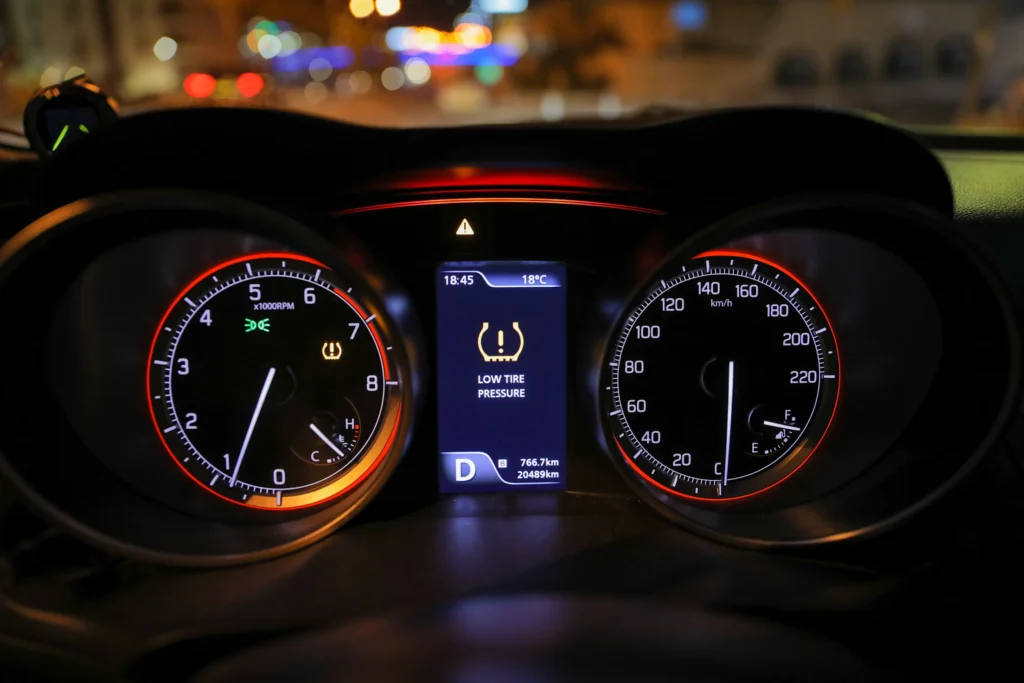
The TPMS light usually comes on because one tyre is genuinely low on air; a faulty or dead sensor is another common reason. Before assuming the sensor is the problem, check the pressures with a gauge.
Other causes include temperature swings (pressure dips on cool, rainy monsoon mornings), a flat sensor battery, a sensor cracked during careless tyre fitting or a kerb strike, a corroded valve stem, or new wheels that haven’t been paired to the car.
| Warning you see | Likely cause | What to do |
|---|---|---|
| Solid light, one tyre reads low | Low pressure or puncture | Inflate to placard PSI and check for leaks |
| Light comes and goes in the morning | Pressure close to threshold | Top up to the recommended PSI |
| Flashing light, then solid (“TPMS fault”) | Sensor not communicating | Sensor test; likely battery or fault |
| One wheel shows “–” or no reading | Dead or unpaired sensor | Sensor diagnosis and replacement/pairing |
| Warning after new tyres or rims | Sensor not registered or damaged | Program or relearn sensors |
How long do TPMS sensors last?
TPMS sensors typically last several years before the sealed battery runs down. Industry sources commonly cite around 5 to 10 years, depending on the sensor design, how often it transmits and how much the car is driven (Jalopnik, MOTOR).
In most sensors the battery is sealed inside and can’t be replaced on its own, so when it dies the whole sensor is replaced. Sensors fitted together tend to age together, so we test all four when one fails.
What does TPMS sensor replacement in Singapore involve?
TPMS sensor replacement involves removing the tyre from the rim, fitting a compatible new sensor, re-mounting and balancing the wheel, then programming or pairing the sensor to your car. It’s not just a parts swap: an unpaired sensor leaves the warning light on.
A proper job follows these steps:
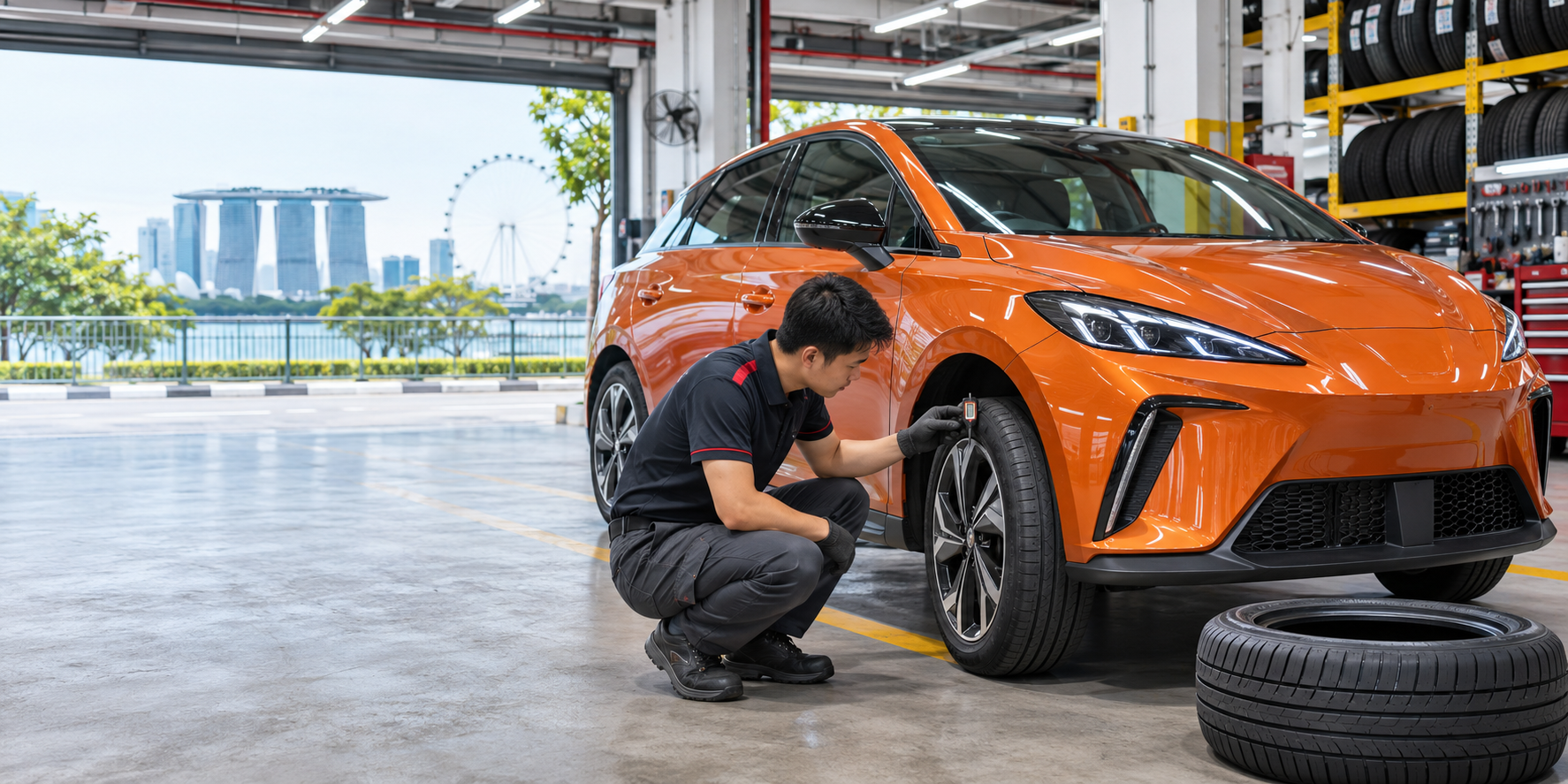
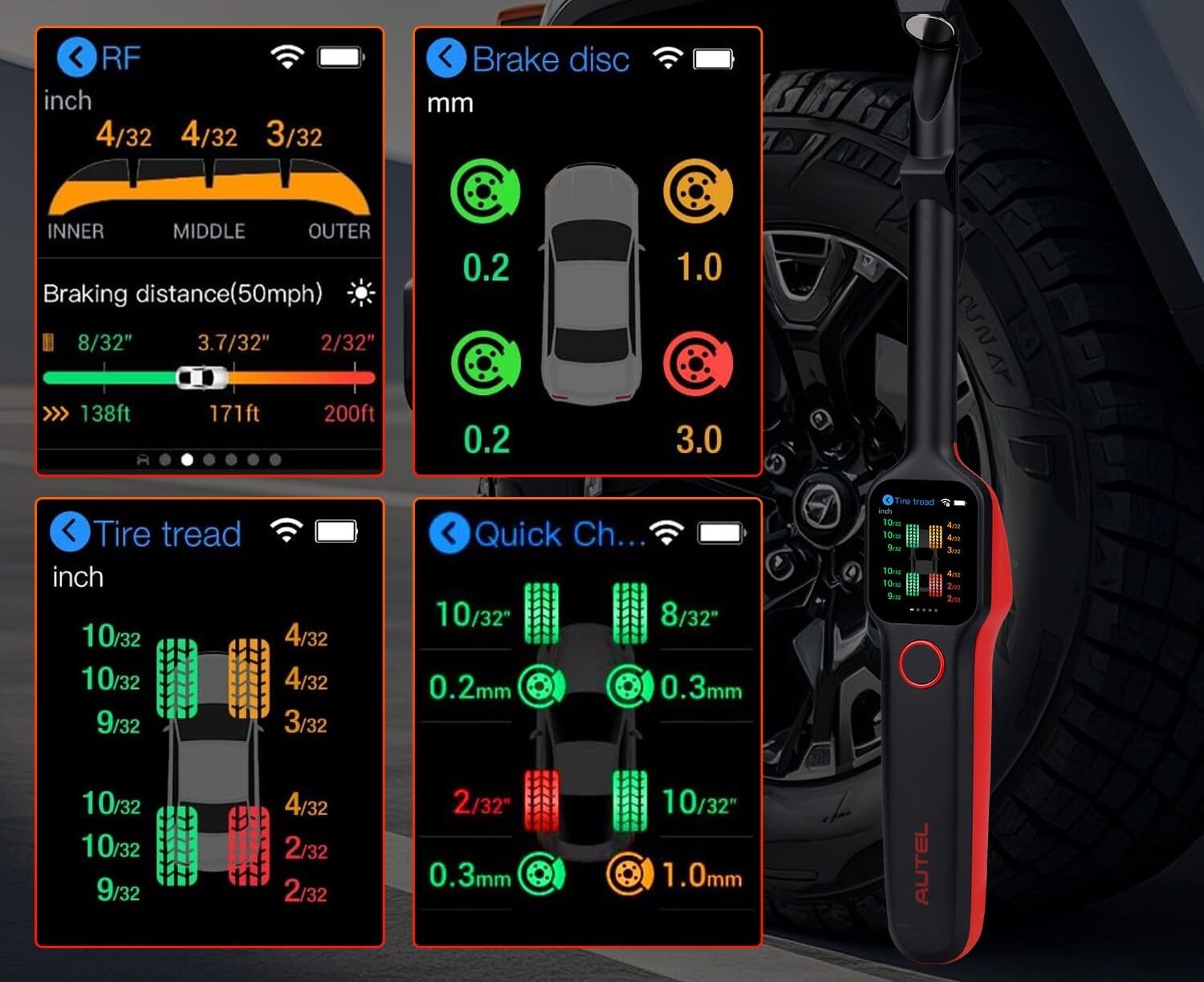
- Diagnose: scan each wheel with a TPMS tool to read sensor ID, battery status, pressure and frequency.
- Confirm compatibility: match the sensor type (RF frequency or BLE) to your exact model and build year.
- Dismount carefully: large, low-profile EV tyres (some with acoustic foam) are removed without touching the sensor.
- Fit the new sensor and valve: with new seals and the correct torque on the valve nut.
- Re-mount and balance: the wheel is balanced so you don’t get vibration at expressway speeds.
- Program or relearn: a programmable sensor is coded for your car, then registered through a relearn procedure or the car’s own menu (on newer Teslas, BLE sensors are paired through the car’s service menu).
- Verify: confirm all four wheels report correct pressures on the dashboard before you drive off.
It makes sense to do sensor work during an EV tyre replacement, since the tyre is already off the rim.
Can I drive with a faulty TPMS sensor?
You can usually still drive with a faulty TPMS sensor, but you lose your early warning for a puncture or low tyre, which is risky on a heavy EV. Many EVs don’t carry a spare tyre, so catching a slow leak early is your best protection against being stranded.
Until it’s fixed, check pressures weekly with a gauge and before any Malaysia trip, using the placard figure inside the driver’s door frame, not the maximum printed on the sidewall.
Signs you need a tyre specialist
Book a check with an EV tyre specialist if you notice:
- A TPMS light that stays on even after you’ve inflated all four tyres.
- A “TPMS fault” or “check tyre pressure system” message.
- One wheel showing no reading or a reading that doesn’t change.
- A tyre that loses pressure again within days.
- Warnings that started right after a tyre change or new rims.
How Motion EV Tyre helps
At Motion EV Tyre by Motoserv, we handle TPMS diagnosis, sensor replacement and programming for EVs and hybrids, including Tesla, BYD, MG, BMW, Mercedes EQ, XPeng and Dongfeng. Our IMI-certified technicians read every sensor with EV diagnostic tools first, so you only replace what needs replacing.
- TPMS service and programming: see our TPMS solution page.
- EV tyre inspection: a full check of tread, pressure, sensors and wear patterns via our EV tyre inspection service.
- Model-specific tyres: for example, our Tesla EV tyres and BYD EV tyres pages.
- Tyre replacement, balancing and rotation: with 100% genuine tyres from Michelin, Continental, Hankook iON, Giti and Toyo.
For more EV tyre basics, read our pillar guide to electric vehicle tyres in Singapore or browse the EV tyre blog. We don’t publish prices because sensor type varies by model, so contact us for a quote for your exact car.
Our outlets and opening hours
- Motoserv @ Havelock (main): 548 Havelock Rd, Singapore 169637
- Shell Autoserv: 219 Upper Bukit Timah Rd, Singapore 588186
- Serangoon Garden: 49 Serangoon Garden Way, Singapore 555944
Open Monday to Saturday, 9am to 6pm. Closed on public holidays.
Key takeaways
- A TPMS light most often means low pressure; check with a gauge before blaming the sensor.
- TPMS sensors have sealed batteries and are typically replaced as a whole unit after several years.
- Sensor type matters: RF (such as 433MHz) and Bluetooth (BLE) sensors aren’t interchangeable.
- Every new sensor must be programmed or paired, or the warning light stays on.
- Doing sensor work during a tyre change saves time and an extra dismount.
Frequently asked questions
How much does TPMS sensor replacement cost in Singapore? The cost depends on your car model, whether it needs an RF or Bluetooth sensor, and how many sensors are replaced. Motion EV Tyre doesn’t publish fixed prices, so contact us with your car model for a quote for your exact setup.
Can I replace just the TPMS sensor battery? In most TPMS sensors the battery is sealed inside the housing, so it can’t be replaced on its own. When the battery runs flat, the whole sensor is replaced and then programmed to the car.
Do I need to replace all four TPMS sensors at once? Not necessarily. If only one sensor has failed, it can be replaced alone. However, sensors fitted at the same time tend to age together, so we test all four and tell you which are near the end of their life.
Will a non-original TPMS sensor work on my Tesla? Quality aftermarket sensors can work if they match your Tesla’s system: newer Teslas from around 2021 use Bluetooth sensors, while older ones use RF sensors. The sensor must then be paired to the car, which a specialist can do.
Why does my TPMS light come on after a tyre change? This usually happens when a sensor was damaged during fitting, the valve wasn’t sealed properly, or new wheels haven’t been paired to the car. A TPMS scan quickly shows which wheel is the problem.
Got a TPMS warning that won’t go away? Call Motion EV Tyre by Motoserv on +65 8220 3588, email info@motoserv.sg, or book your TPMS check online.